What the collective self-consumption rules mean for installers: A practical reading of collective self-consumption for PV teams.
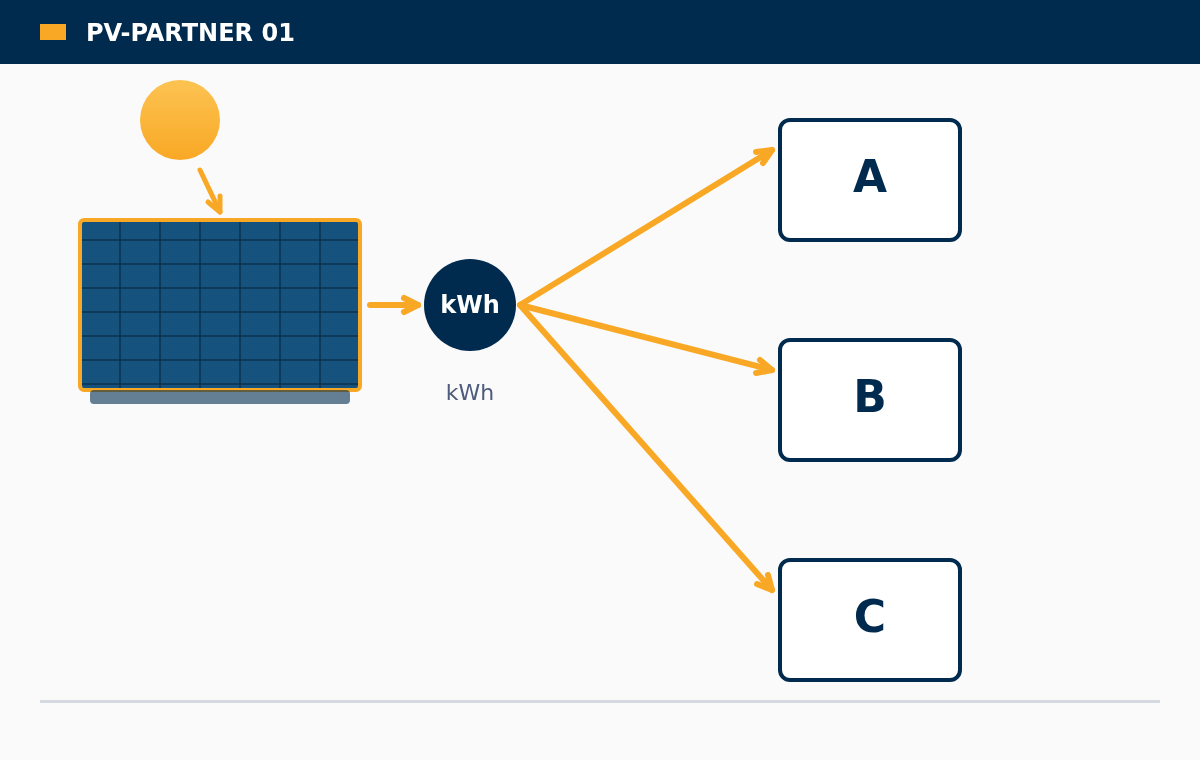
Collective self-consumption lets several consumers share one PV installation behind the same network connection point. For installer teams, the difference between quoting a single-home system and a shared one is mostly paperwork, not hardware.
What to check before quoting
- Confirm the connection point and the list of participating consumers.
- Agree the distribution coefficient in writing before ordering equipment.
- Check whether a surplus-compensation scheme applies to the project.
A clean setup at the start avoids months of invoice disputes later. Treat the distribution agreement as part of the installation, not an afterthought.
1. Interior Network vs. Sharing Through the Public Distribution Grid (RD 244/2019 & DL 15/2022)
A frequent misconception in multi-consumer solar quoting is assuming all participants must sit behind the same private building meter room. Both Spain and Portugal explicitly authorize two distinct topological regimes:
- Collective self-consumption via internal network (en red interior): Generation and consumer meters share the same private internal installation (typical residential apartment block under Spain's Ley de Propiedad Horizontal or an industrial park).
- Collective self-consumption through the distribution network (a través de la red de distribución / RESP): Generation injects into the public grid and energy is allocated virtually across nearby consumer CUPS/CPE supply points that meet statutory proximity criteria.
2. Spain Proximity Rules, Allocation Coefficients (β) & Official BOE Sources
Under Spain's Real Decreto 244/2019 (BOE-A-2019-5089), updated by Real Decreto-ley 18/2022 and Real Decreto-ley 20/2022, an installation qualifies for collective self-consumption through the low-voltage distribution network when at least one of the following conditions is met (per the IDAE Professional Self-Consumption Guide):
- Connected to the same low-voltage transformer station (Centro de Transformación BT) and distributed in low voltage.
- Sharing the first 14 digits of the cadastral reference (referencia catastral).
- Located within a geodesic distance of ≤ 500 m (general rule) or up to ≤ 2,000 m when the photovoltaic generator is installed exclusively on building roofs, industrial land, or municipal canopies.
Installers must prepare the signed Allocation Agreement (Acuerdo de Reparto) defining either fixed coefficients (βi summing to 1.000000) or a dynamic hourly 8,760-row plain-text file submitted to the distribution company (e-distribución, i-DE, UFD, E-REDES España).
3. Portugal ACC & Renewable Energy Communities under Decreto-Lei n.º 15/2022
In Portugal, Decreto-Lei n.º 15/2022 and the DGEG Autoconsumo & CER Portal govern collective self-consumption (Autoconsumo Coletivo — ACC). The managing entity (Entidade Gestora do Autoconsumo Coletivo — EGAC) submits the internal regulation (Regulamento Interno), participant CPE list, and sharing rules (fixed percentage, proportional to consumption, or dynamic automation) so E-REDES can net 15-minute generation intervals against each member's load.
| Regulatory Parameter | Spain (RD 244/2019 & RDL 20/2022) | Portugal (DL 15/2022 ACC / CER) |
|---|---|---|
| Sharing modalities | Interior network OR through the public distribution grid (a través de la red) | Internal installation OR through the public grid (RESP / E-REDES) |
| Grid proximity criteria | Same LV transformer (CT), cadastral ref prefix (14 digits), or <= 500 m (<= 2,000 m on roofs/industrial) | Same voltage level / transformer zone validated by E-REDES |
| Allocation coefficients (β) | Fixed static or dynamic hourly file (8,760 h/yr) submitted to DSO; min 4-month lock | Fixed, proportional, or dynamic sharing rules notified via DGEG & E-REDES |
| Primary legal source | BOE-A-2019-5089 (RD 244/2019) & IDAE Collective Guide (Checked 4 Nov 2026) | Diário da República DL 15/2022 & DGEG Portal (Checked 4 Nov 2026) |
Multi-Dwelling & Collective Self-Consumption BOM Support
Need three-phase inverters, bidirectional smart meters, or shared LiFePO4 storage for an RD 244/2019 or DL 15/2022 project?
Frequently Asked Questions (FAQ)
Does collective self-consumption in Spain require all consumers to share the same building meter room?+
No. Under Royal Decree 244/2019 and RDL 20/2022, collective self-consumption can operate either through an internal network or through the public distribution network when participants share the same low-voltage transformer, the first 14 cadastral digits, or sit within 500 m (up to 2,000 m for rooftop and industrial PV).
How are hourly allocation coefficients (beta) communicated in Spain and Portugal?+
In Spain, participants sign an Acuerdo de Reparto (static fixed percentages or an 8,760-hour dynamic TXT file) and submit it individually to their retailer and DSO. In Portugal, the EGAC registers the internal regulation and CPE sharing rules via the DGEG portal and E-REDES.
Which metering and inverter hardware is required for shared installations?+
Installations require grid-certified three-phase inverters (UNE 217002 / NTS 631 in Spain; DGEG / EN 50549-1 in Portugal), a generation meter socket where mandated by the DSO, and optional AC/DC-coupled lithium storage.
Author: Virginie Paulo (Senior PV Distribution & Regulatory Specialist) · Technical review: Hendryk Knuth (Technical Director, PV-PARTNER / YOFI SUN S.L.) · Regulatory & technical verification date: 4 November 2026. Prepared with AI-assisted drafting and verified against primary BOE, DGEG, and manufacturer documentation.